Table of Contents
- Introduction
- The Limestone Gorge at Robber's Cave
- The Sulfur Springs of Sahastradhara
- The Colonial Scale of the Forest Research Institute
- The Wildlife Enclosure at Malsi Deer Park
- The Wilderness Tracts of Rajaji National Park
- The Tibetan Architecture at Mindrolling Monastery
- The Cave Shrine at Tapkeshwar Temple
- The Forest Pools at Lachhiwala Nature Park
- The River Terraces of Maldevta
- The Wilderness Trail to Shikhar Falls
- The Historical Heights of Khalanga War Memorial
- The Mountain Outpost at George Everest House
- The Spiritual Core of the Buddha Temple
- The Mountain Torrent at Kempty Falls
- The Historic Lanes of Paltan Bazaar
- Other Major Attractions of Dehradun for Tourists
- FAQ's
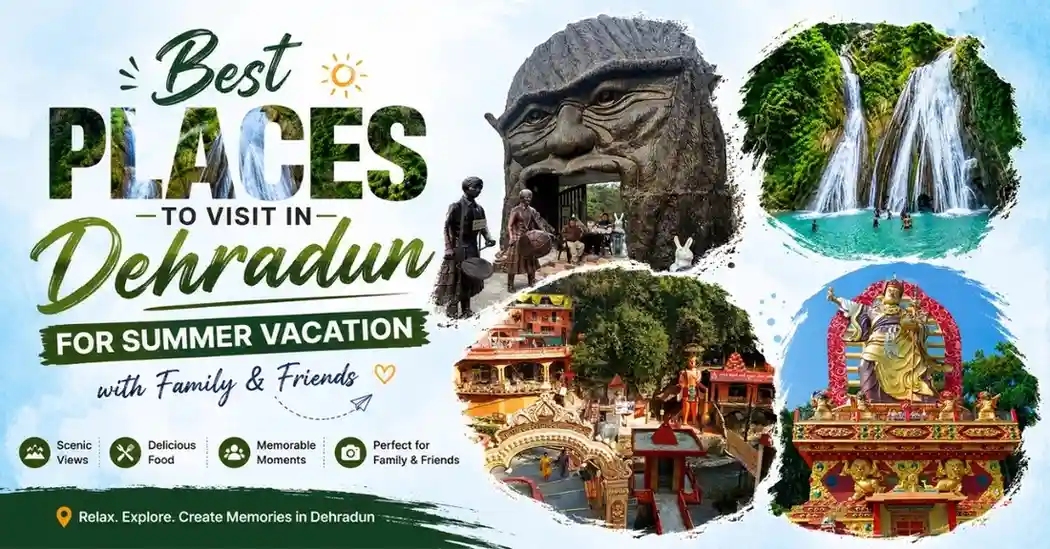
How many times did you spend your summer vacation at a place and thought it was worth it? Most people choose travel spots after scouring the internet, falling for overhyped locations, and regretting the decision later. This summer, do not just rush into a random booking without understanding the local geography of the Doon Valley. The city sits inside a unique basin between the Lesser Himalayas and the Shivalik hills. This specific altitude keeps the temperatures manageable when the northern plains start to burn in June. Packing your bags for the foothills requires a clear itinerary that separates the noisy commercial traps from the genuine mountain retreats. Finding the absolute best places to visit in Dehradun means looking closely at how the water systems, forests, and colonial history shape the town.
The local map has rewritten itself completely over the last few decades. The old retirement town is gone, replaced by a busy city that gets jammed with weekend traffic. Because of this fast growth, classic tourist pamphlets end up pointing you toward concrete squares that bake in the sun. A smart traveler needs to look past the standard brochures to find locations that offer actual physical relief from the heat. You want thick tree canopies, cold moving water, and high ridge lines where the air stays sharp. This guide breaks down fifteen active spots across the valley floor and the upper hills to keep your group from getting stuck in a crowded trap.
The Limestone Gorge at Robber's Cave
Locally known as Guchhupani, this destination is a narrow river canyon located near the Anarwala village area. The geologic formation consists of a deep limestone split where a cold mountain stream flows directly through a dark, high-walled cave system.
- Unique Design: The cavern walls rise up to ten meters high in some sections, completely blocking out the direct midday summer sun.
- The Hydrology: You walk barefoot through ankle-deep water that originates from an underground spring and emerges at a small waterfall inside the gorge.
- The Grid: The total walking path stretches for about 600 meters inside the dark, cool limestone fissure.
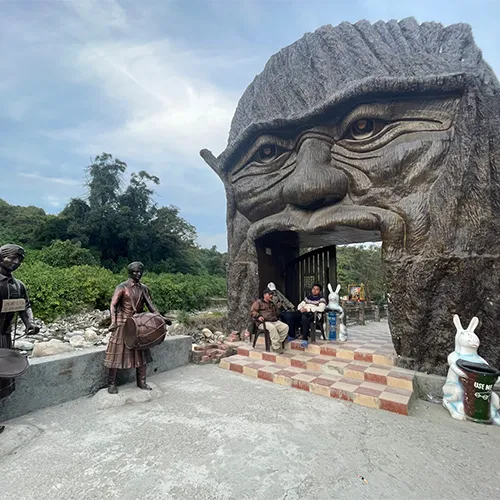
It remains one of the best places to visit in Dehradun city when your group wants to experience a natural air-conditioning effect. The water stays freezing even during the peak of June. You should bring extra footwear because the riverbed rocks can be sharp and slippery underfoot.
The Sulfur Springs of Sahastradhara
Sahastradhara translates directly to the thousand-fold spring, located on the banks of the Baldi River. The site is famous for its limestone dripping caves and water pools that carry a high concentration of sulfur.
- Water Chemistry: The sulfur pools maintain a distinct therapeutic quality, attracting visitors looking for natural skin remedies.
- The Architecture: Concrete steps and terraced pools have been constructed to harvest the natural flow for public bathing.
- The Ropeway: A small cable car system connects the riverbed to a high hilltop park for an elevated view of the valley.
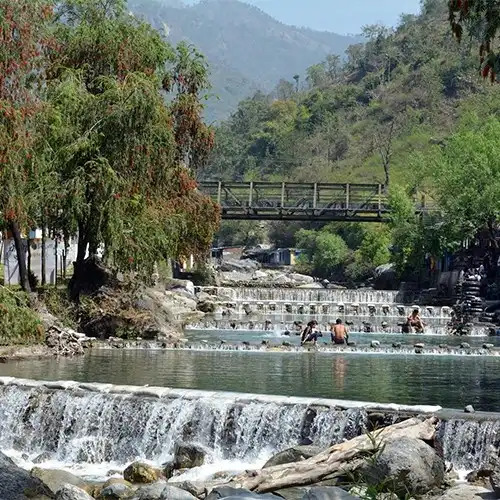
Families find this spot highly functional due to the shallow depth of the terraced pools. The water leaves a distinct mineral scent on the skin because of the heavy limestone filtration happening upstream. It is best to arrive before 9:00 AM to avoid the massive tourist buses that pack the narrow access road later in the day.
The Colonial Scale of the Forest Research Institute
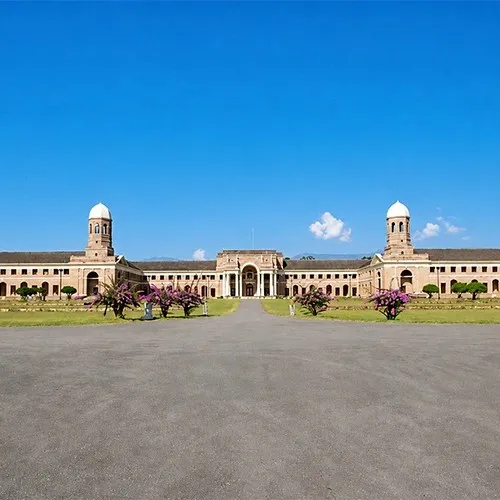
The Forest Research Institute represents a massive architectural achievement from the colonial era, established formally in 1906. The main building features a Greco-Roman style built entirely from red brick, stretching across a vast, manicured campus.
- The Footprint: The central structure is larger than Buckingham Palace, featuring a line of deep, arched corridors that run for hundreds of meters.
- The Museums: Six specialized museums cover subjects like silviculture, pathology, non-wood forest products, and social forestry.
- The Botany: The exterior grounds host an arboretum with mature tree species brought from multiple continents during the British Raj.
This one of the best places in Dehradun is absolutely a must visit, especially for families who are more into historical places and peaceful gardens. The brick pathways provide amazing shade for strolls on hot afternoons. You could easily spend half a day checking out the wood treasures and ancient tools in the big rooms.
The Wildlife Enclosure at Malsi Deer Park
Recently upgraded and renamed as the Dehradun Zoo, this site sits directly on the highway leading toward Mussoorie. The facility serves as a rescue and conservation center for the native fauna of the Shivalik range.
- The Species: The main enclosures house spotted deer, sambar, leopards, ghorals, and an extensive collection of high-altitude birds.
- The Aviary: A walk-through aviary allows you to observe hornbills and parakeets at close range without glass partitions.
- The Geography: The park is built on a sloping hill, meaning you will face a mild physical workout while walking between the animal exhibits.
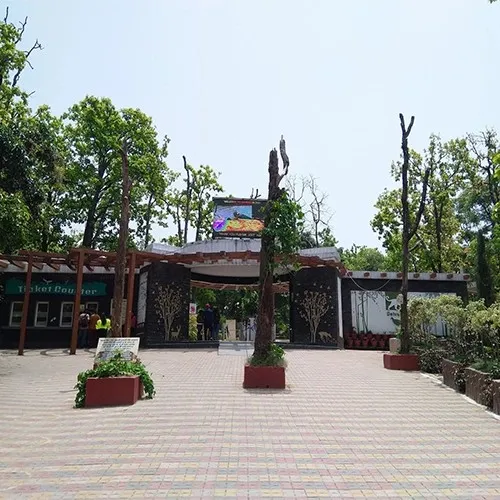
This is a prime choice when looking for the best places to visit in Dehradun with friends who want a quick, casual walk among wildlife. The shady pine trees across the upper tracks keep the walking trails cool. It offers a practical break point before your vehicle begins the steep climb up the mountain switchbacks.
The Wilderness Tracts of Rajaji National Park
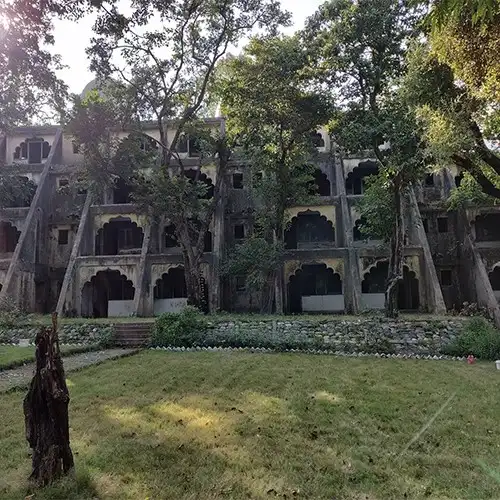
Covering over 820 square kilometers, Rajaji National Park sits at the southern edge of the valley where the hills flatten out. The reserve represents the northernmost boundary for the wild Asian elephant population in India.
- The Ecosystem: Dense Sal forests dominate the landscape, interspersed with dry riverbeds that become active during heavy rains.
- The Safaris: Open-top gypsy vehicles take visitors through the Chilla or Motichur tourism zones along fixed dirt tracks.
- The Birds: Over 300 bird species live here, including the great hornbill and the oriental pied hornbill.
The park closes every year from November 15 to June 15, so your last chance to see dry-season animal migrations is during those early summer weeks. You can grab a morning safari slot to watch the elephants head towards the Ganges or Song rivers for a drink. This gives you an up-close, raw look at the sub-Himalayan wildlife system.
The Mountain Ridge Sanctuary at Shiv Mandir (Mussoorie Road)
Perched along the steep curves of the hills just before the major altitude climbs, the Prakasheshwar Mahadev Mandir sits as a key cultural anchor. The temple complex is dedicated to Lord Shiva and offers an expansive viewpoint looking down over the green northern rim of the valley.
- The Ridge Geography: The structure is built straight into the hillside rock, catching intense mountain crosswinds that bring instant cooling.
- The Hospitality Code: The temple runs a continuous public kitchen serving hot mountain tea and simple meals to every traveler for free.
The Rules: A strict local policy forbids any cash donations or commercial photography inside the inner shrine rooms.
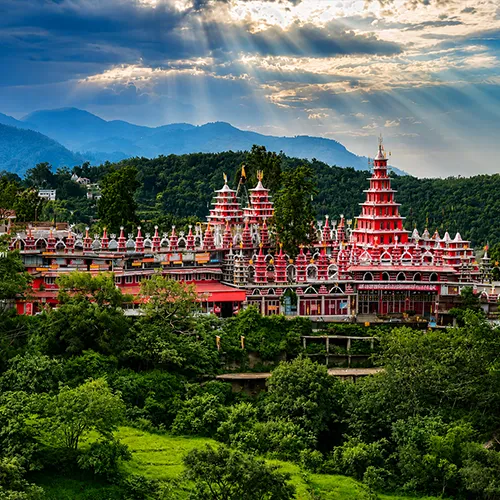
It functions as a mandatory rest point for families driving up the Mussoorie road during the peak of summer. The open courtyards allow travelers to stretch their legs while taking in the high-altitude air currents. It is a highly reliable stop to break up a long, hot afternoon road trip with a dose of local community warmth.
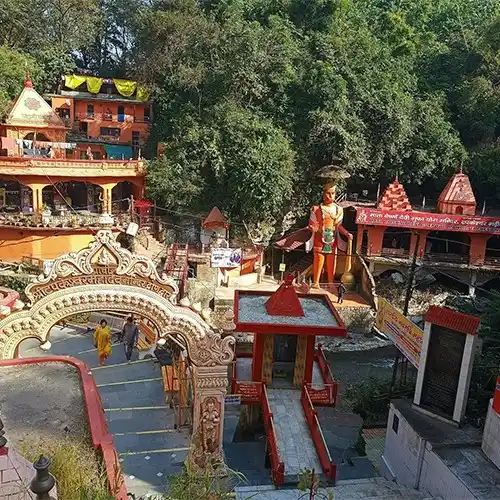
The Cave Shrine at Tapkeshwar Temple
Tapkeshwar Temple is an ancient religious site dedicated to Lord Shiva, located on the banks of the Asan River. The main deity sits inside a natural limestone cave where water droplets continuously fall from the ceiling onto the stone lingam.
- The Hydrology: The natural water dripping mechanism gives the temple its name, derived from the Hindi word tapakna.
- The Sulfur Baths: A short distance from the main cave, a separate sulfur water spring allows pilgrims to wash before entering the shrine.
- The Geography: The temple complex is built down in a river trench, requiring visitors to descend a long flight of concrete stairs.
The cool air inside the river trench provides instant relief from the summer sun. It is a highly active ritual site, so you will see local priests conducting traditional ceremonies along the riverbank throughout the day. It offers a deep look into how natural cave geology shapes local religious practices.
The Forest Pools at Lachhiwala Nature Park
Lachhiwala sits along the Haridwar-Dehradun highway, centered around a series of man-made pools fed by the clean waters of the Suswa River. The entire park is surrounded by a dense canopy of old Sal trees.
- The Pools: The river water is channeled into terraced concrete public pools with varying depths for safe swimming.
- The Canopy: Large trees block out the sun completely over the picnic lawns, creating an ideal spot for day-long family gatherings.
- The Infrastructure: The state forest department manages the site, providing basic changing rooms and public amenities.
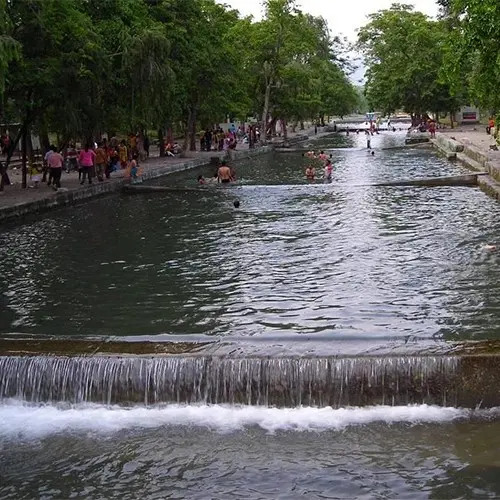
It is a classic destination when planning a trip with a large family group containing both children and elderly members. The entry fees are minimal, and you can bring your own food supplies for an outdoor lunch under the trees. The water flows continuously, keeping the pools fresh despite the high foot traffic during June weekends.
The River Terraces of Maldevta
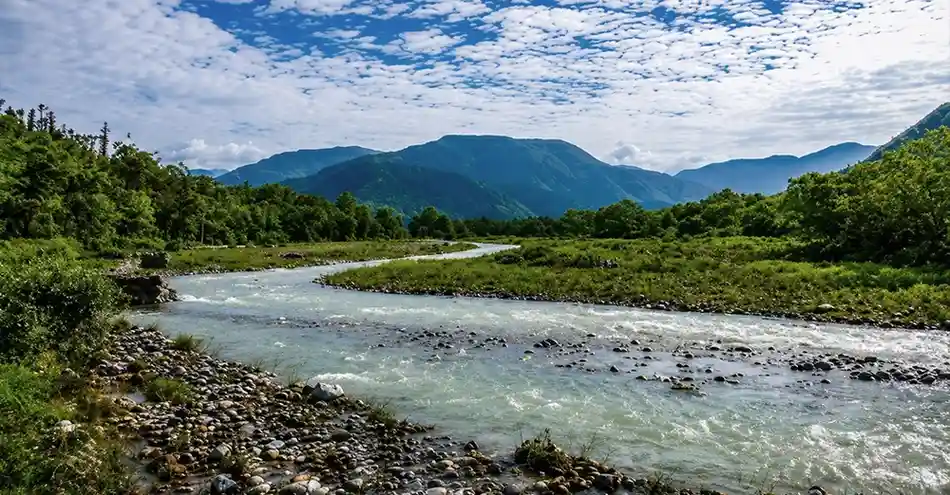
Maldevta is an open river valley located on the outskirts of the city near the Raipur block. The destination is defined by the wide, rocky bed of the Song River and the sharp green hills that rise directly from the water’s edge.
- The Terrain: Wide gravel banks allow visitors to park close to the water and set up camp chairs directly in the stream.
- The Water: The river is shallow and clear here, making it safe for wading and sitting during the hot afternoon hours.
- The Bridge: A prominent iron bridge spans the river, serving as a landmark for travelers heading toward the deeper Garhwal villages.
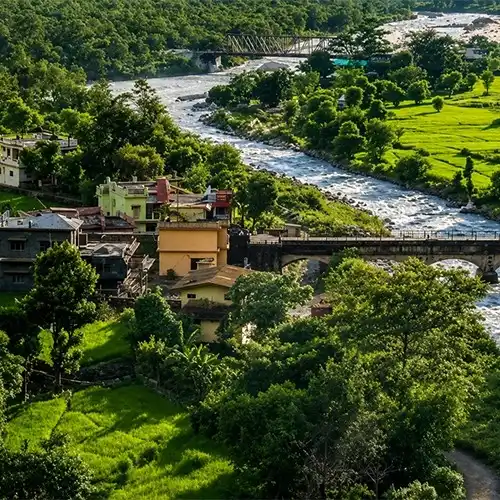
Friends often pick this location for evening drives because the valley catches a strong, cool breeze as soon as the sun drops behind the western ridge. It has a wilder, less managed feel than the public parks inside the city limits. You can sit on the limestone rocks and watch the water move down toward the plains.
The Wilderness Trail to Shikhar Falls
Shikhar Falls is a hidden waterfall located near the village of Dumga, requiring a short but steep rocky trek to reach the main pool. Unlike the commercial waterfalls on the highway, this spot remains relatively rugged.
- The Hike: You must walk for about one kilometer along a rough riverbed path, stepping over wet boulders and tree roots.
- The Fall: The water tumbles down a sheer rock face into a clean pool surrounded by thick ferns and wild ivy.
- The Biodiversity: The damp, shaded valley serves as a micro-habitat for unique local butterflies and mountain frogs.
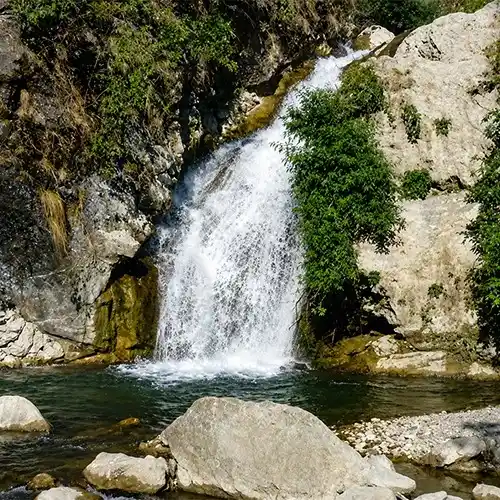
It is one of the best places to visit in dehradun with friends who enjoy physical adventure and want to avoid manicured public parks. The trail can be physically demanding for small children, but the reward is a completely isolated swimming hole. The air temperature inside the rocky ravine stays significantly lower than the open highway outside.
The Historical Heights of Khalanga War Memorial
The Khalanga War Memorial stands as a rare historical monument dedicated to an enemy force, built by the British to honor the Gurkha soldiers who fought at the Battle of Nalapani in 1814.
- The Location: It sits on a high, pine-covered ridge near the Sahastradhara road, overlooking the eastern sectors of the city.
- The History: The inscription on the stone obelisk honors the bravery of Captain Balbhadra Thapa and his Gurkha unit.
- The Access: A winding, narrow tar road climbs through a dense pine forest to reach the quiet memorial grounds.
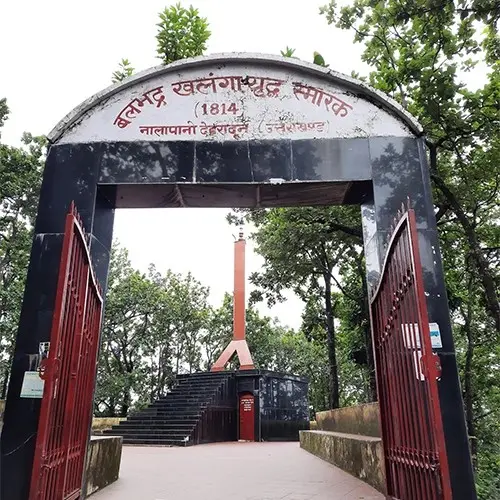
The ridge offers a clean, panoramic view of the entire Doon Valley floor without the crowds found at other viewports. It is a highly educational stop for families who want to understand the military history of the Anglo-Nepal War. The constant wind through the pine needles creates a soothing acoustic background for a quiet afternoon walk.
The Mountain Outpost at George Everest House
Located slightly past the main Dehradun boundary on the ridge leading to Mussoorie, this was the home and laboratory of Sir George Everest, the Surveyor General of India who measured the highest peaks.
- The Structure: The white-washed house from 1832 has been restored into a historical display center showing ancient mapping tools.
- The Ridge: The property sits on a razor-thin mountain edge, giving you a dual view of the Aglar Valley on one side and the Doon Valley on the other.
- The Peak: A steep, rocky path leads from the house up to the Everest Peak viewpoint, decorated with colorful Tibetan prayer flags.
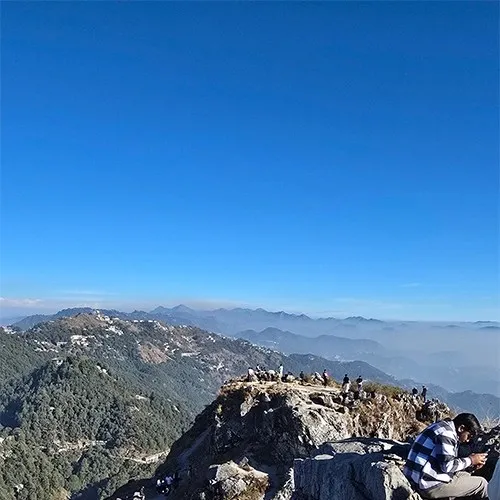
Couples choose this spot for the dramatic sunset views when the fog rolls in from the northern valleys. It is significantly cooler than the city floor due to its high altitude. The open meadows surrounding the old laboratory provide a vast space to sit and watch the clouds move across the peaks.
The Spiritual Core of the Buddha Temple
The Buddha Temple is the central prayer hall of the Mindrolling complex, designed as a classic example of traditional Tibetan monastic engineering. The structure rises through multiple storeys, each representing a different level of spiritual understanding.
- The Artistry: The exterior features elaborate golden trim, painted columns, and massive ceremonial entrance doors.
- The Library: The upper floors contain archives of ancient Tibetan scripts, woodblock prints, and religious texts.
- The Garden: A large courtyard surrounds the temple, featuring a long row of heavy bronze prayer wheels that visitors can spin.
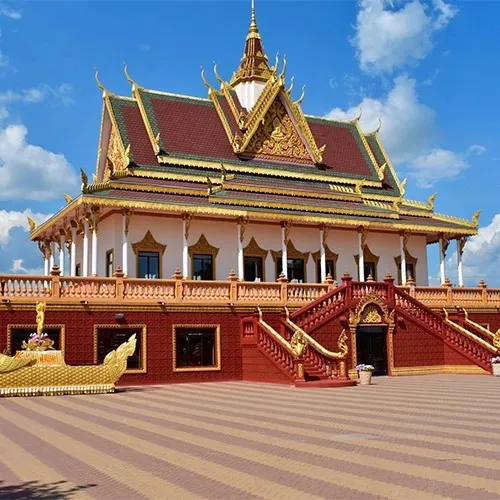
The interior requires absolute silence and the removal of all footwear before stepping onto the heavy wooden floor mats. It provides a cool, dark space for contemplation away from the glaring summer heat outside. The smell of burning juniper incense fills the air, creating a sensory experience that stays with you long after you leave.
The Mountain Torrent at Kempty Falls
Kempty Falls is a legendary mountain waterfall located on the highway beyond Mussoorie, dropping from a height of nearly forty feet before splitting into five distinct streams.
- The Pool: A massive concrete catchment basin has been built at the base to allow hundreds of tourists to swim simultaneously.
- The Access: A small funicular railway car system carries visitors down the steep hillside from the main parking lot to the water level.
- The Commerce: The entire rocky gorge is lined with local stalls renting swimwear, lockers, and selling hot mountain snacks.
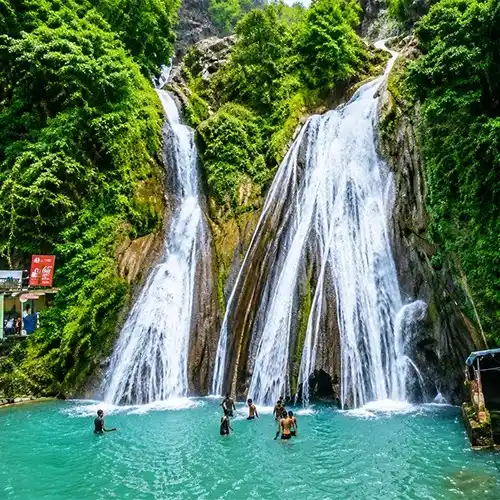
While it is highly crowded during the summer vacation season, it remains a traditional favorite for families who want a high-volume water experience. The force of the mountain water coming off the high ridge creates a continuous cold mist that cuts through the summer heat. You should plan an early morning departure from Dehradun to beat the heavy traffic along the mountain road.
The Historic Lanes of Paltan Bazaar
Paltan Bazaar is the oldest commercial market in the city, stretching from the iconic Clock Tower down to the railway station area. The narrow lanes have served as the retail heart of the valley for generations.
- The Specialty: The market is famous for local basmati rice, embroidered Garhwali shawls, wooden artifacts, and fresh spices.
- The Food: Small, legacy sweet shops along the tracks serve traditional Doon specialties like sticky milk rusk and fresh sweets.
- The Vibe: A busy, loud pedestrian zone filled with the sights, sounds, and scents of traditional North Indian trade.
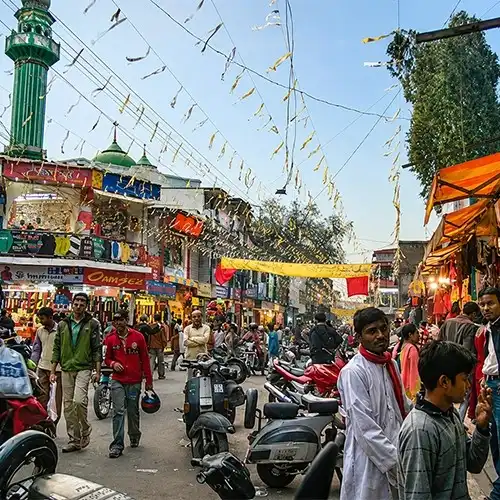
It is one of the best places to visit in Dehradun city if your group wants to shop for authentic local products instead of generic mall brands. The old wooden shop fronts offer a glimpse into the pre-independence architectural style of the town. It is best explored on foot during the late evening hours when the temperature drops and the market lights turn on.
Other Major Attractions of Dehradun for Tourists
If you manage to clear all the major monuments and natural parks, the valley still holds several unique corners that show off its modern lifestyle. The northern stretch of Rajpur Road has slowly evolved into a premium zone for culinary arts and slow outdoor living. Visitors who are tired of walking through crowded public reserves often head up this ridge to experience the quieter side of the foothills. It is here that you find the true modern character of the town, hidden underneath a heavy green canopy of ancient trees.
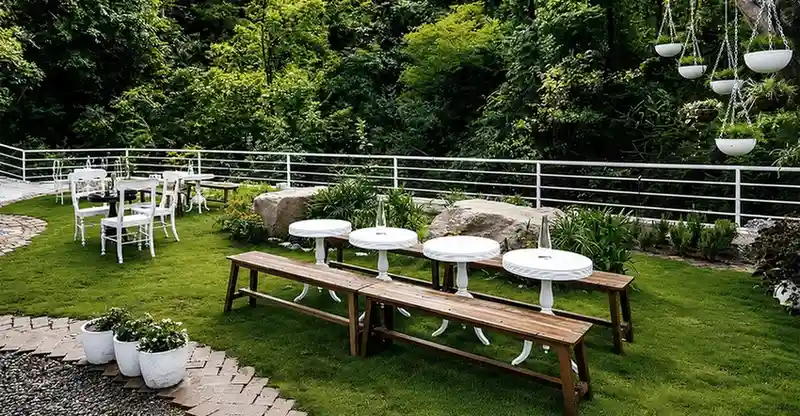
When you are exploring this northern ridge near the Mussoorie diversion, finding the best cafe to visit in Dehradun becomes your next logical move. Foresta Café sits precisely in this zone, built directly into a protected patch of old Sal forest. The architecture uses local stone and wide glass walls to create a space that does not disrupt the existing root systems or the native bird habitats. It acts as a perfect sanctuary after a long day spent walking through the hot limestone corridors of Robber’s Cave or the brick halls of the Forest Research Institute.
The kitchen at Foresta Cafe operates with a serious focus on technical execution, utilizing a massive wood-fired brick oven that runs at temperatures standard kitchens cannot match. You can sit on an open wooden deck beneath the tall trees and enjoy an authentic pepperoni pizza with a properly charred crust. The space transitions from a quiet morning workspace for digital nomads into a vibrant evening destination where the lights of Mussoorie flicker directly above the tree line. It offers a clean, grounded environment where your family can sit together and process the day’s travel without the noise of city traffic ruining the moment.
FAQ's
Q1:Which is the best place to visit in Dehradun during a hot summer afternoon?
A:Robber’s Cave is highly efficient during the afternoon because the high limestone walls block out the direct sun completely. Walking through the freezing, ankle-deep cave water provides immediate relief from the valley heat.
Q2: Are there any good places to visit in Dehradun with friends that involve light trekking?
A:Shikhar Falls and George Everest House are excellent choices for active groups. Shikhar Falls requires a one-kilometer rocky riverbed scramble, while George Everest offers a steep ridge hike with views of the surrounding peaks.
Q3:Where can we find a premium dining spot after exploring the northern attractions?
A:Foresta Café on Mussoorie Road is a top choice, serving as a highly rated best cafe to visit in Dehradun. It features outdoor seating inside a real Sal forest and specializes in authentic wood-fired pizzas.
Q4:Is Rajaji National Park open throughout the summer vacation season?
A:The national park closes its tourism gates strictly on June 15 every year for the monsoon season. If you are planning an early summer vacation in May or early June, you can still book the morning safari slots.
Would you like me to expand on the specific outdoor seating vibes at Foresta Café or perhaps list some must-try signature drinks?
 Book a Table
 Call
Call
 Contact Us
 Menu
Menu
 Directions